Redefining how medicine
is discovered, validated,
and made
Built in Australia. Our Syngenis AI platform and our own laboratories carry a therapeutic or diagnostic idea from candidate design to validated, trial-ready material, without leaving the country.
Two assets. Five divisions.
One compounding platform.
At the centre is Syngenis AI, our platform and system. Beneath it sits our laboratory that renders the capabilities that share the same engine. These are our two major assets, with the value of every discovery extending across all business systems. This is what it means to be an Integrated Life Sciences Company, driven by one compounding engine.
Syngenis AI
Finding the molecules that matter
Our AI platform identifies, validates and designs RNA and DNA therapeutic candidates at a speed and scale deemed impossible by conventional methods.
Explore SYNGENIS ONEManufacturing
Made here in Australia to clinical grade
From our Australian facility, oligonucleotides are currently being synthesised to GLP standard, with GMP clinical grade expected from Q2 2027. It’s Australia's only commercial RNA and DNA manufacturing facility.
Explore ManufacturingPlatform
Research. Clinical. Capital.
The Syngenis Platform brings together research services, clinical development support (through Syngenis Clinical), and our direct investment arm (through Syngenis Ventures). Together, client programs are taken from discovery, through to trial, and forward to commercialisation.
Explore the PlatformThe bottleneck is no longer the science
For a century medicine was built from chemistry, the small molecules that treat the symptoms of disease. RNA and DNA medicines work differently. They read, understand, and respond to disease at the molecular level, addressing its cause rather than its effect. This is no longer a promise; the bottleneck has been overcome. RNA interference medicines, antisense oligonucleotides, mRNA vaccines, and CRISPR gene editing are already approved and treating patients, reaching diseases that were considered untreatable only a decade ago.
Today, it is the speed of discovery and access to validated, regulated material to move programs forward. Syngenis was built to solve both.
Over 21 RNA and DNA medicines have already received FDA approval, treating patients across rare genetic disease, cardiovascular conditions, and metabolic disorders, including Spinraza (spinal muscular atrophy), Amvuttra (ATTR amyloidosis), Leqvio (high cholesterol), and Onpattro (hereditary transthyretin amyloidosis). This is a proven drug class. The challenge and opportunity now lie in manufacturing capacity, discovery speed, and scale. That is precisely what Syngenis is built to deliver.
Discovery is too slow and too fragmented
Finding the next RNA or DNA breakthrough still takes years of fragmented effort across disconnected tools, teams, and suppliers. In Australia there has been no single pathway that carries a discovery from insight to trial-ready material on home soil. Every hand-off adds delay, cost, and exposure of valuable Intellectual Property. Syngenis closes that gap, by bringing AI-led discovery, and clinical delivery under the one roof, into our accredited laboratories.
Partners across research, industry, and care
 Biotechnology companies developing RNA and DNA therapeutics and diagnostics.
- Universities and research institutes needing custom nucleic acids and validated material.
- Clinicians and diagnostics developers seeking point of care tests.
- Consumers, through the Life Care genomics service.
The engine is already running
Our first AI-discovered candidate was designed by Syngenis AI and has now entered laboratory validation. It is the first to complete the full discovery to laboratory workflow. Research grade manufacturing is operational and generating revenue today, and we are building GMP grade capability. We work alongside leading Australian and international universities, research institutes and biotechnology companies.
Professor Marvin H. Caruthers. A Lifetime of Innovation. A Legacy for the Future.
Almost every synthetic DNA and RNA molecule made anywhere in the world today exists because of one man.
In the late 1970s and early 1980s, Professor Caruthers invented phosphoramidite chemistry, the method that made it possible to build DNA and RNA reliably, repeatedly, and at scale. That single invention turned DNA synthesis from a painstaking academic exercise into an industrial capability, and it underpins virtually all modern molecular diagnostics, genomics, gene editing and nucleic acid medicine. When a laboratory anywhere orders an oligonucleotide, it is using his chemistry.
Professor Caruthers did not stop at the science. He co-founded Applied Biosystems, which commercialised automated DNA synthesis and sequencing, and Amgen, one of the largest biotechnology companies in the world. His contributions have been recognised with the United States National Medal of Science, the highest scientific honour in the country.
Professor Caruthers's solid-phase phosphoramidite chemistry is the foundation upon which every FDA-approved oligonucleotide therapeutic has been synthesised. From Vitravene, the first antisense drug, approved in 1998, to Spinraza, Amvuttra, and the full catalogue of approved RNA and DNA medicines that followed, his chemistry underpins them all. Having Professor Caruthers as Patron of Syngenis Labs Ltd is not a ceremonial appointment. It is a direct connection between the founding chemistry of the field, and the Company building the next generation of RNA manufacturing and discovery infrastructure.
Early Career
Foundations in organic chemistry and nucleic acids at Colorado State University, where his passion for chemistry and teaching began.
Inventor & Scientist
Developed solid phase phosphoramidite chemistry, the foundation of modern DNA synthesis. His innovation revolutionised the ability to build synthetic DNA.
National Medal of Science
Awarded by President George W. Bush in recognition of his extraordinary contributions to science and biotechnology, this being the highest scientific honour in the United States.

Global Leader & Mentor
Co-founded Applied Biosystems and helped build Amgen. A sought-after advisor, mentor, and voice in advancing biotechnology and nucleic acid technologies worldwide.
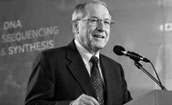
Patron, Syngenis Labs Ltd
In 2025, Professor Caruthers was appointed Patron of Syngenis Labs Ltd. His legacy continues to guide our mission, inspire our quest for innovative solutions, and leads us as we uphold the highest scientific standards in RNA and DNA research and manufacturing.
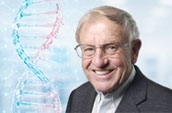
Professor Caruthers and Syngenis
Founding Director
Syngenis Labs Ltd
Building the vision and strategy from the very beginning.
Founding Chair
Syngenis Scientific Advisory Board
Guiding scientific excellence and innovation.
Patron
Syngenis Labs Ltd
Honouring his enduring legacy and lifelong commitment.
One compounding engine, working across the whole business
Bring your program to Syngenis
Whether you are designing a candidate, ordering custom oligonucleotides, planning a nucleic acid trial or exploring a partnership, we would like to hear from you.
Call 1300 100 111 or send an enquiry.